Why you keep having the same fight (and how to finally have a different one)
Conflict · · by TwoTrue team
Listen · 5 min
Read aloud by an AI voice
Some of these are affiliate links: if you buy through them we may earn a small commission, at no cost to you.
It starts with something small. The dishes. A late text. A tone of voice. And within a few minutes you're somewhere very familiar — saying the same things, hearing the same things, ending up in the same stuck place.
If that sounds like your relationship, you're not doing it wrong. You're doing what almost every couple does. Most couples don't have a hundred different fights. They have one fight, wearing different clothes.
The good news: once you can see the pattern, you can step out of it.
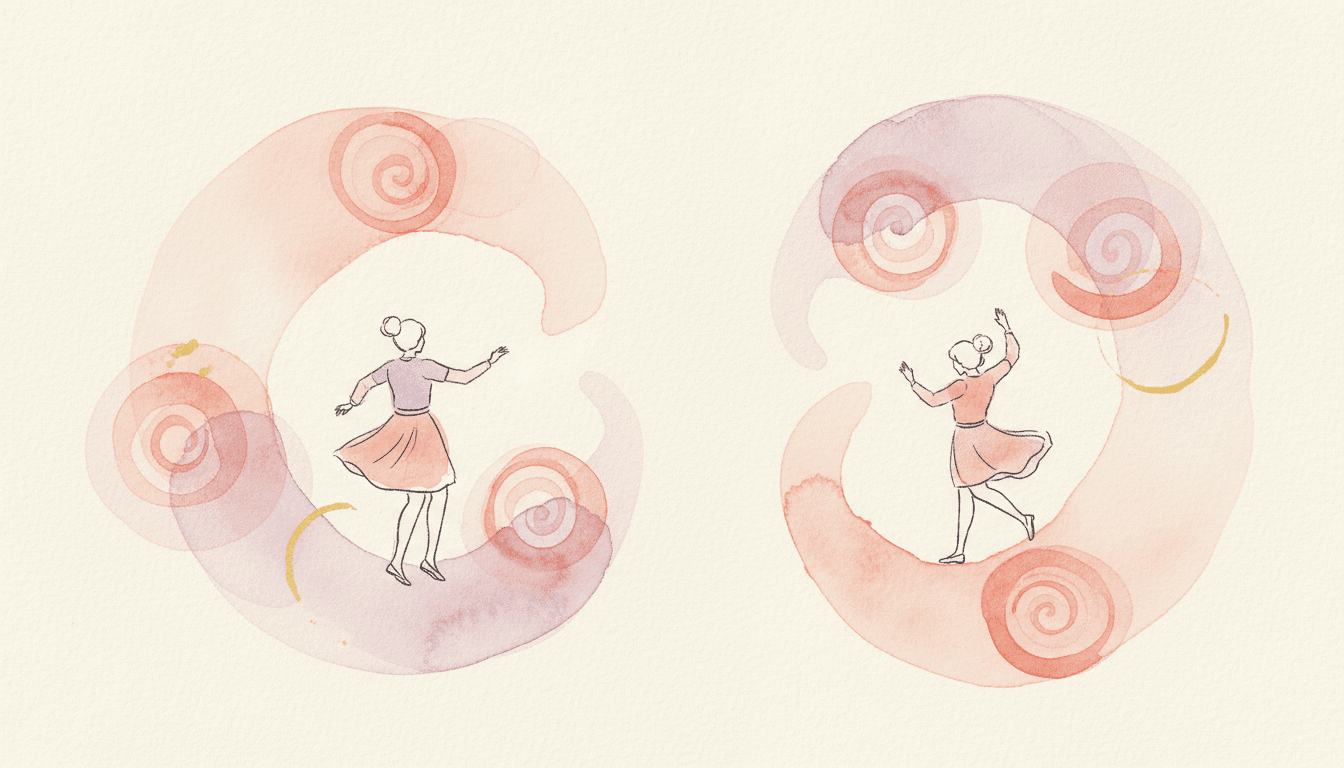
The dance underneath the argument
Emotionally Focused Therapy, developed by psychologist Sue Johnson, describes a pattern many couples fall into called the pursue–withdraw cycle.
Under stress, one partner reaches for connection. They want to talk, now. They push for an answer, a reaction, some sign that the other person is still there. The other partner pulls back to cope. They go quiet, leave the room, change the subject — not because they don't care, but because it's how they calm down.
Here's the painful part: each move sets off the other person's alarm. The more one reaches, the more the other retreats. The more one retreats, the harder the other reaches. Both are trying to feel safe. Both end up feeling more alone.
The argument is rarely about the dishes. Underneath it are two questions each of you is really asking: Are you there for me? Will you respond when I need you?
The four habits that make it worse
Relationship researcher John Gottman spent decades watching couples argue, and he identified four patterns that predict trouble. He called them the Four Horsemen:
- Criticism — attacking the person instead of the problem ("You never think about anyone but yourself").
- Contempt — eye-rolling, sarcasm, mockery; talking down to your partner.
- Defensiveness — deflecting, counter-attacking, making excuses instead of listening.
- Stonewalling — shutting down and withdrawing from the conversation entirely.
Every couple slips into these sometimes. The point isn't perfection. It's noticing — and knowing what to do instead.
Four small moves that change how it ends
1. Start gently
How a conversation starts shapes where it goes. Gottman's antidote to criticism is a gentle start-up: talk about how you feel and what you need, not about what's wrong with them.
Nonviolent Communication, developed by Marshall Rosenberg, gives this a simple shape: what happened (as a camera would have seen it), how you felt, what you need, and one clear request. "When you came home at nine without texting, I felt worried. I need a heads-up when plans change. Would you text me next time?" lands very differently from "You're always so inconsiderate."
2. Take a real break when you're flooded
Sometimes your body gets there before your words do. Your heart races, your thoughts narrow, and nothing you hear makes sense anymore. Gottman calls this flooding, and when it happens, the most useful thing you can do is stop — and take a break of at least twenty minutes to genuinely calm down before coming back.
The key is to come back. A break with a promise ("I need twenty minutes, and then I want to finish this with you") is self-soothing. A break without one feels like abandonment — especially to a partner who pursues.
3. Look for the feeling under the words
When your partner says something sharp, try asking yourself: what might they be feeling right now? Often, criticism is a clumsy way of saying "I miss you" or "I'm scared we're drifting." Defensiveness is often "I'm afraid I'm failing you." You don't have to accept unkind words. But seeing what's underneath them can change how you respond.
4. Repair — early and often
Gottman describes repair attempts as anything that de-escalates tension in a hard moment: an apology, a touch, "can we start over?", even a little shared humor. Stable couples don't avoid conflict — they repair during it.
And afterward, it helps to talk about what happened once you're both calm: how each of you felt, how it looked from where each of you stood, what made it hit harder, what part you'd each own, and what you'll do differently next time.
Where TwoTrue fits
We built TwoTrue around exactly these moments:
- Pause gently steps in before hard words go out, reflecting how they might land — without rewriting what you say.
- Before a hard talk helps you prepare privately in those four parts — what happened, how you felt, what you need, and one clear request — so you can start gently.
- Talk through a hard moment walks you both through what happened afterward, step by step, each answering privately and revealing together — inspired by the Gottman Institute's "Aftermath of a Fight" process.
None of this replaces a counselor when you need one. If arguments ever feel unsafe, please reach out to a professional.
But for the everyday version — the same fight, on repeat — the most powerful change is often the smallest one: noticing the pattern, and choosing a different first move.
Next time it starts, try just one. Start gently. Take the break and come back. Look for the feeling. Offer a repair.
Then see what happens when the old argument doesn't get its usual ending.
Share this post
Books to go deeper
Keep reading
Part of the guide When you keep having the same fight.

Connection · Oct 7, 2026
Pursue and Withdraw: Why the Harder You Reach, the Further They Go
One of you moves toward. One of you moves away. It looks like a mismatch in how much you care — but underneath, you're both protecting the same thing. Here's how the dance works, and one small way to interrupt it this week.
The monthly letter
One thoughtful email a month: new posts and one question to try together. No spam, and you can unsubscribe with one click.