Pursue and Withdraw: Why the Harder You Reach, the Further They Go
Connection · · by TwoTrue team
Listen · 6 min
Read aloud by an AI voice
Some of these are affiliate links: if you buy through them we may earn a small commission, at no cost to you.
The dance you know by heart
You can probably feel it starting before a word is said.
Something goes slightly wrong. A tone. A forgotten thing. A silence that lasts a beat too long. One of you leans in — asking, explaining, needing to sort it out now. The other goes quiet, flat, suddenly very interested in the dishes.
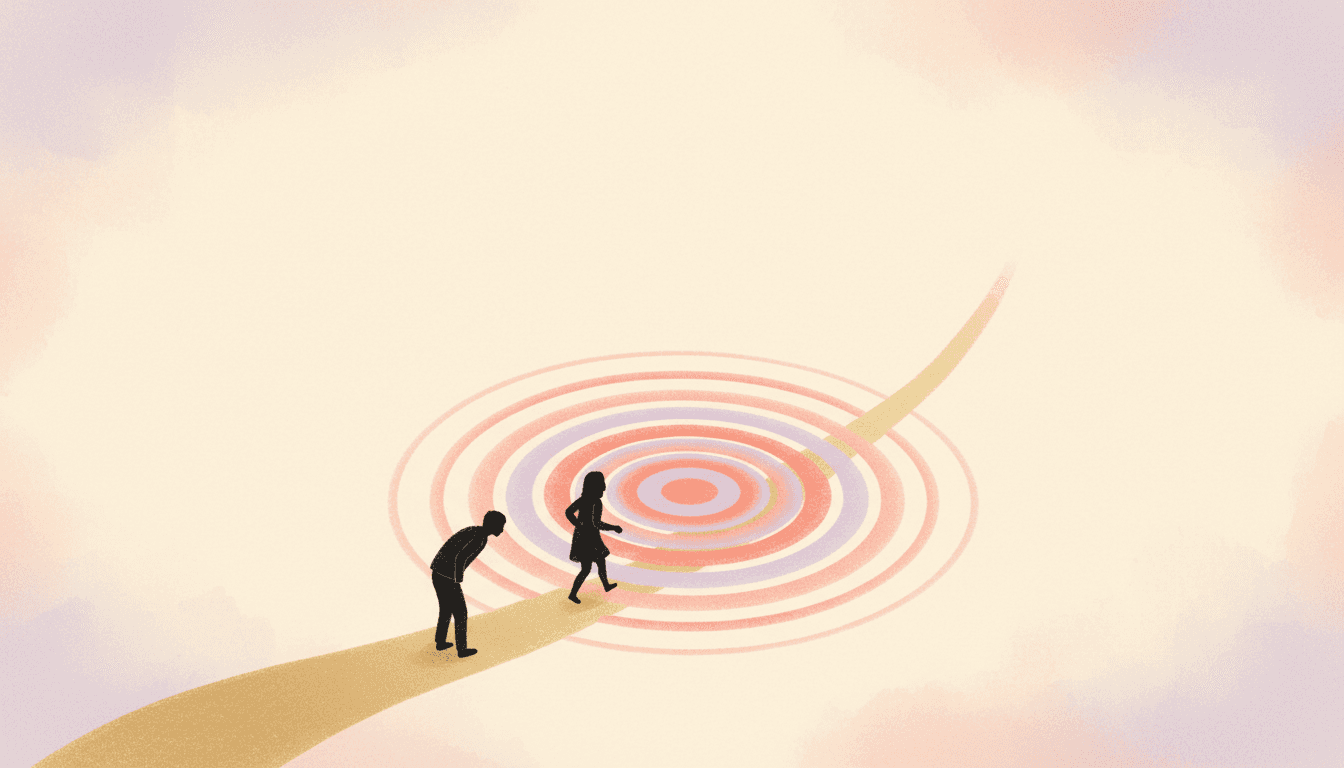
And then it speeds up. The more one reaches, the more the other retreats. The more one retreats, the harder the other reaches. Nobody chose this. You two just slide into it, like water finding the same groove in the rock.
Researchers call it the demand–withdraw pattern, and it's been studied in couples for decades — Andrew Christensen and Christopher Heavey are two of the names most associated with it. In Emotionally Focused Therapy, Sue Johnson calls a version of it the "Protest Polka." Different language, same floor, same two feet.
Here's the part that changes things: this is not a story about one person who cares more and one who cares less. It's a story about two people trying very hard not to lose each other, using strategies that happen to cancel each other out.
What the one who reaches is protecting
If you're the one who pursues, you've probably been told you're too much. Too intense. Can't let it go.
What's actually happening is simpler than that. When the connection between you goes quiet, your body registers it as danger. Not a mild inconvenience — danger. So you do the most natural thing in the world: you reach. You ask one more question. You follow them into the other room. You raise the volume, not because you're trying to win, but because you need to know you still matter to them.
Attachment research gives this a name: protest. It's what we do when someone we depend on seems to be slipping out of reach. It looks like anger from the outside. From the inside, it feels like fear.
What you're protecting: the bond. You'd rather have a hard conversation than a cold house. Silence, to you, is not peace. It's the beginning of being left.
What the one who pulls away is protecting
If you're the one who withdraws, you've probably been told you don't care. That you're shutting them out. That talking to you is like talking to a wall.
What's actually happening is that your system is overwhelmed. John Gottman's work on conflict describes a state he calls flooding — heart rate climbing, body bracing, the thinking part of the brain going offline. When you're there, you genuinely cannot access the words your partner is asking for. Going quiet isn't a strategy. It's what's left.
And there's usually a belief underneath it: if I say the wrong thing, I'll make this worse. So you say nothing. You go still. You wait for the storm to pass, convinced that your silence is the most loving thing you have to offer.
What you're protecting: the bond, too. You're trying not to be the person who blows it up. You're trying not to fail them again.
Why both of you feel like the one doing all the work
Because you are — just in opposite directions.
The pursuer sees a partner who won't engage and thinks: I'm the only one fighting for us.
The withdrawer sees a partner who won't stop and thinks: I'm the only one trying not to make it worse.
Neither of you is lying. You're each watching a different half of the same pattern. And here's the cruel mechanics of it: your protective moves are precisely the thing that triggers the other person. Reaching reads as attack. Retreating reads as abandonment. You're each stepping on the exact nerve you most want to protect.
The real shift comes when you stop asking who started it and start naming the pattern itself as the problem. Not you. Not them. The dance. Eli Finkel's work has found that briefly reappraising conflict from a neutral, outside perspective is linked to couples maintaining more marital quality over time — in one study with married couples. The move is the same here: step back far enough to see the shape of the thing, together.
Try this week: the re-entry promise
One small thing. Not a whole new way of communicating — just a patch over the place where you two keep falling through.
Agree on it now, while things are calm. Pick a word or a short phrase. Something plain: I'm flooded. Then make two promises.
If you tend to withdraw: when you use the phrase, you also name a time. "I'm flooded. Can we come back to this at eight?" The time is the whole point. Gottman's research suggests that physiological calming takes real time — give yourself at least twenty minutes, and actually use it to settle rather than rehearse your case. Then come back. Coming back is the promise. If you don't come back, the phrase becomes just another door closing, and it will stop working.
If you tend to pursue: when you hear the phrase, you stop. No last point. No one more sentence. And you say something that holds the thread: "Okay. I'll be here." You're not being abandoned — you're being asked to wait with the lights on.
Then at eight, whoever withdrew opens the conversation. That part matters. It tells the one who reaches: I came back on my own. You didn't have to drag me.
It will feel awkward the first time. Do it anyway. You're not solving the fight — you're proving to each other that distance can be temporary.
A gentler frame
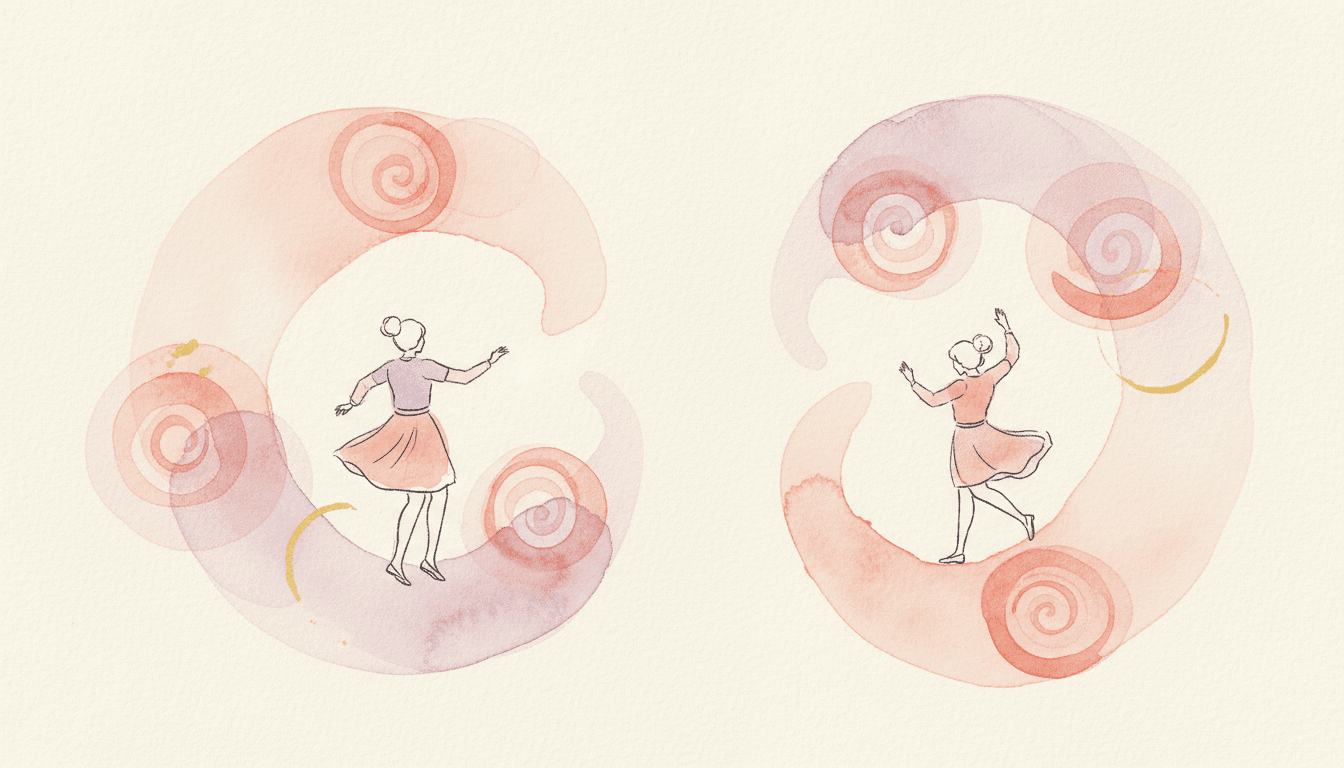
You two aren't incompatible. You're just protecting the same thing from opposite ends of the room.
One of you fears losing connection. One of you fears losing control of yourself. Both of you are afraid of losing this. That's not a mismatch. That's two people who are still very much in it.
A note: this pattern is different from contempt, intimidation, or a partner using silence to punish or control you. If what happens in your home leaves you frightened, diminished, or walking on eggshells, that deserves support from a licensed therapist — not a communication tool.
Share this post
Books to go deeper
Keep reading
Part of the guide When you keep having the same fight.
Conflict · Oct 5, 2026
Why you keep having the same fight (and how to finally have a different one)
Most couples don't have a hundred different arguments — they have one, over and over. Here's the pattern underneath it, and four small moves that change how it ends.
The monthly letter
One thoughtful email a month: new posts and one question to try together. No spam, and you can unsubscribe with one click.