The wiser voice in you — and why it's worth following when it's hard
Growth · · by Greg Yung
Listen · 6 min
Read aloud by an AI voice
Some of these are affiliate links: if you buy through them we may earn a small commission, at no cost to you.
You know the moment. Someone says something that stings, and before you've decided anything, your body has: your chest tightens, your jaw sets, the sharp reply is already loaded. Or it's quieter — the urge to scroll instead of call, to say "fine" instead of the truth, to skip the hard conversation one more time.
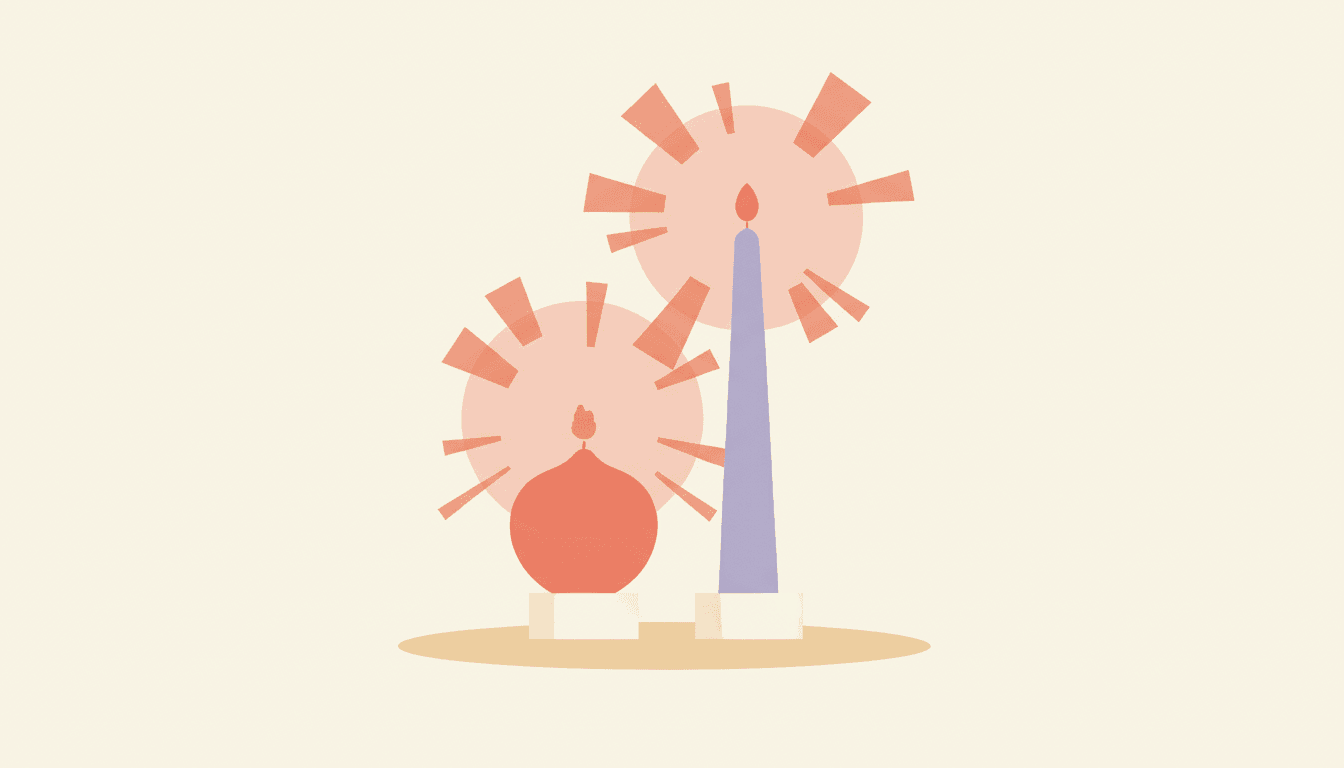
That first voice is fast, loud and very convincing. It speaks for how you feel right now.
But if you pause, even for a breath, there's usually another voice underneath it. Quieter. Slower. It sounds less like your mood and more like the person you want to be. It often suggests the harder thing: to soften, to listen, to apologize, to stay.
Most of us know that second voice is right. The challenge is hearing it in time — and following it when every part of us would rather not.
Two voices, and why the fast one usually wins
The fast voice isn't your enemy. It's built for speed: to protect you, keep you comfortable, save energy. In a real emergency, it's a gift.
The trouble is that most hard moments in a relationship aren't emergencies. They're moments that call for perspective — and perspective takes a moment longer to arrive.
Thinkers in very different traditions have pointed at the same gap. The Stoic philosopher Epictetus opened his Handbook with the observation that some things are up to us and some aren't: what happens to us often isn't, but our judgments and our response are. Aristotle argued that character is built by practice — that we become just by doing just acts. Neither claimed it was easy. Both suggested the better response is something you can grow into.
Modern psychology has its own ways of describing it:
- Reappraisal. Psychologist James Gross's research on emotion regulation found that changing how you read a situation tends to work better than simply holding your feelings in. "They're attacking me" and "they're overwhelmed and it's coming out sideways" lead to very different next moves.
- Putting feelings into words. In a lab study by Matthew Lieberman and colleagues, simply naming a feeling was linked to a calmer response in the brain. Saying "I'm feeling defensive" out loud — even silently — can create a little room.
- Acting on what you value. Acceptance and Commitment Therapy, developed by Steven Hayes and colleagues, helps people make room for hard thoughts and feelings without letting them decide what happens next — and to act on what they actually care about.
Different words, one idea: you can feel the urge fully and still choose your response.
Making the wiser voice easier to hear
The wiser voice gets louder with practice, and with a little planning.
Decide before the moment. Psychologist Peter Gollwitzer's research on if-then plans found that deciding in advance — "If I feel myself getting defensive, I'll ask a question instead" — is linked to better follow-through on goals. The decision is already made when the heat arrives.
Change the cue, not just your willpower. Habit researcher Wendy Wood has shown that habits run on context: the same setting triggers the same response. If your worst arguments happen at 11pm in the kitchen, the wisest move might be agreeing not to have serious talks at 11pm in the kitchen.
Know what you stand for. It's easier to follow the wiser voice when you know what it's for. Kindness? Honesty? Being someone your partner feels safe with? Write it down. Re-read it on hard days.
You will fail. That's part of it.
Here's the part that matters most: you won't always listen. You'll snap, withdraw, take the easy way — and realize it ten minutes, or ten days, later.
That realization isn't failure. It's the wiser voice catching up.
What you do next matters a lot. It's tempting to pile on: I always do this. I'll never change. But research suggests harshness tends to backfire. In experiments by Juliana Breines and Serena Chen, people who were kind to themselves after a mistake were more motivated to improve and make amends — not less. Psychologist Kristin Neff describes this self-compassion as treating yourself the way you'd treat a friend, remembering that everyone struggles, and noticing your feelings without drowning in them.
Habit research offers comfort too: in a study of how habits form in daily life, Phillippa Lally and colleagues found that missing a day didn't undo progress. Growth isn't a straight line. A slip is not a reset.
So when you fall short:
- Recognize it — "I took the easy way out there."
- Learn from it — "What was I feeling? What would I do differently?"
- Repair where you can — "I was short with you earlier. That wasn't fair. Can I try again?"
- Forgive yourself — and mean it.
- Move forward with one new thing you know now that you didn't before.
That cycle is the growth. Each turn of it makes the wiser voice a little louder next time.
Try asking each other
When have you seen me choose the harder, kinder response — and what did it mean to you?
Where TwoTrue fits
- My Personal Space is yours alone — a private place to answer reflective questions and get to know your inner world, so you can grow into your best self and a better partner.
- Your journal is a place to name what happened and what you'd do differently, privately.
- Pause gently reflects how your words might land before you send them — a moment for the wiser voice to speak.
TwoTrue is a guided space for growth, not therapy. If anger or old patterns feel out of your control, or you feel unsafe, please reach out to a professional.
The fast voice will always be there — it's part of being human. But so is the other one. You can hear it. You can follow it, more often than you think. And when you don't, you can come back to it, learn, forgive yourself, and try again. That's not falling short of growth. That's what growth looks like.
Share this post
Books to go deeper
Keep reading
Part of the guide Growing yourself, growing together.
Growth · Oct 18, 2026
The Blind Spot Inventory: Six Questions Your Partner Could Answer About You That You Can't
We all have moves we can't see ourselves make — a tone, a timing, a look. Your partner sees them every day. Here's a gentle, structured way to ask, and to hear the answers without getting defensive.

Growth · Oct 19, 2026
What Happened the First Time You Learned Love Could Be Withdrawn
Our earliest lessons about closeness follow us into adult love — into how we reach, retreat and react. Understanding yours isn't about blaming the past. It's about choosing your next move with more freedom.
Growth · Oct 11, 2026
You noticed the pattern. That's where change begins.
Seeing your own patterns — the way you shut down, snap, or people-please — can feel discouraging. It's actually the first, hardest step of growth. Here's how to take the next one with kindness.
The monthly letter
One thoughtful email a month: new posts and one question to try together. No spam, and you can unsubscribe with one click.