The Blind Spot Inventory: Six Questions Your Partner Could Answer About You That You Can't
Growth · · by TwoTrue team
Listen · 4 min
Read aloud by an AI voice
Some of these are affiliate links: if you buy through them we may earn a small commission, at no cost to you.
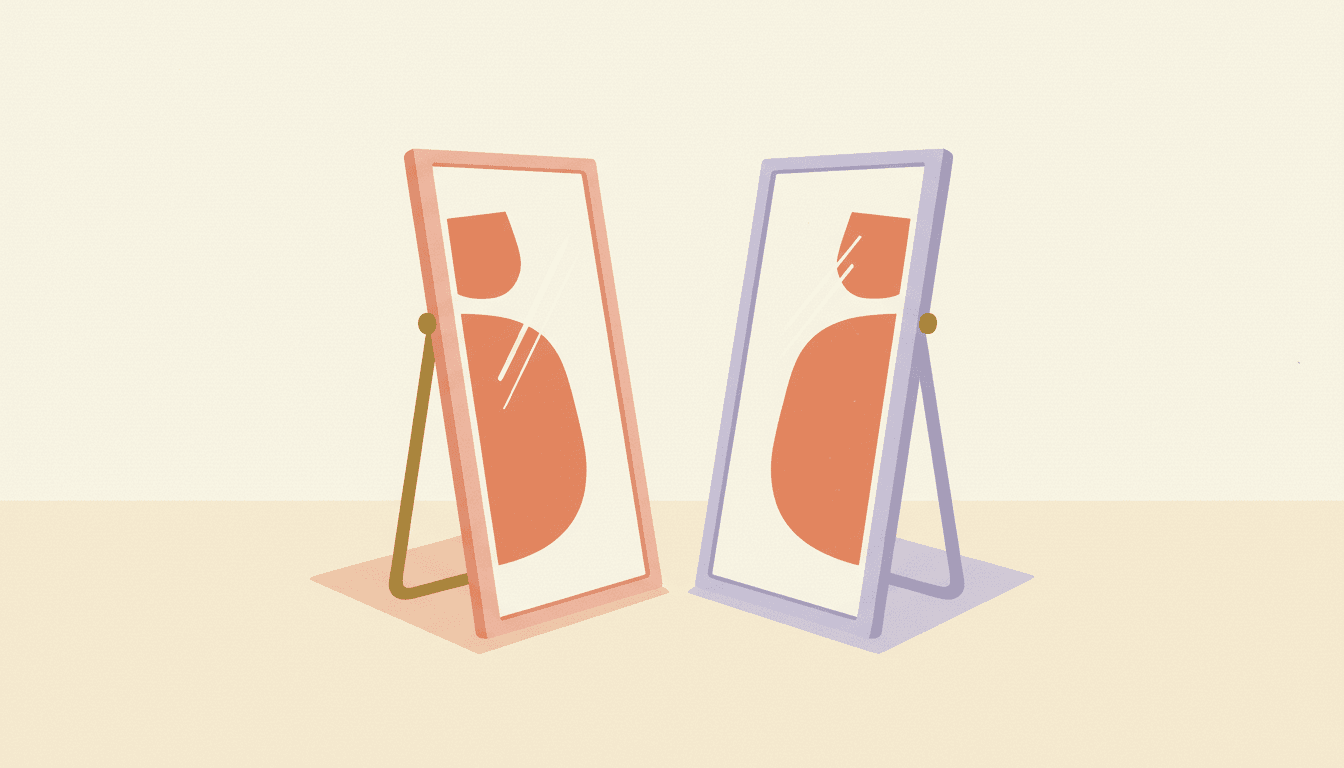
You know your thoughts, your intentions, your reasons. What you can't easily see is you — the way your voice changes when you're tired, the look on your face when you disagree, the thing you always do right before an argument starts.
Your partner can. They've seen it hundreds of times.
That makes your partner one of the best mirrors you'll ever have. The trick is asking in a way that feels safe — for both of you — and listening in a way that lets the answers help.
Why a partner's view can help you grow
Psychologists Stephen Drigotas, Caryl Rusbult and colleagues studied what they called the Michelangelo phenomenon: partners who see you as the person you're trying to become — and treat you that way — are linked to you actually growing toward that ideal self. Like a sculptor revealing a figure in stone, a loving partner can help bring out who you're becoming.
That only works if you can hear what they see. And hearing it depends on how it's asked and received. Psychologist Harry Reis's research on perceived partner responsiveness — feeling understood, valued and cared for — suggests why: people open up most when they trust they'll be met with care.
Before you start: three ground rules
1. Pick a calm moment. Not after a fight, not when one of you is exhausted. A walk, a slow morning, a quiet evening.
2. You're asking for information, not a verdict. Your partner is sharing what they notice — not a final judgment on who you are.
3. Your only job is to listen and say thank you. No explaining, defending or "but that's because…" — at least not today. If something stings, you can say "That's hard to hear. Thank you for telling me," and come back to it later.
The six questions
1. "What do I do when I'm stressed that I might not notice?"
Stress changes us in ways we rarely see — a shorter fuse, going quiet, over-planning.
2. "Is there a tone or phrase of mine that lands harder than I probably mean it?"
Often the words are fine; it's the delivery.
3. "When do you feel most comfortable bringing something up with me — and when do you hold back?"
This one reveals a lot about whether your partner feels safe raising hard things.
4. "What's something I'm better at than I give myself credit for?"
Blind spots aren't only flaws. Many of us miss our own strengths.
5. "What do I do right before we start arguing?"
Many couples have a recognizable first move — a sigh, a "fine," a question that's really a criticism. Knowing yours is powerful.
6. "What's one small thing I could do that would make you feel more loved?"
End on something hopeful and practical.
Try asking each other
What's something about me you see clearly that you think I don't?
After the conversation
- Write down what you heard — privately, without editorializing.
- Pick one thing to work on. Just one.
- Thank your partner again later. It takes courage to tell someone you love something true about them.
- Notice when they notice your effort. Growth seen by a partner tends to stick.
If answers bring up something heavy — old hurts, patterns that feel stuck — that's not a failure. It might be a sign to talk it through slowly, together or with a counselor. TwoTrue is a guided space for growth, not therapy.
Where TwoTrue fits
- Questions you both answer privately and reveal together let you share honestly first — and see each other's answers at the same moment.
- Ask a question lets either of you ask the other something of your own — like one of these six.
- My Personal Space and your journal give you a private place to sit with what you heard and decide what you'll do with it.
Asking to see your blind spots is one of the bravest things a partner can do. It says: I trust you to see me, and I want to grow. And on the other side of that conversation is usually something you both want — to feel more known, by each other and by yourselves.
Share this post
Books to go deeper
Keep reading
Part of the guides Growing yourself, growing together and Everyday connection: the small moments.

Growth · Oct 19, 2026
What Happened the First Time You Learned Love Could Be Withdrawn
Our earliest lessons about closeness follow us into adult love — into how we reach, retreat and react. Understanding yours isn't about blaming the past. It's about choosing your next move with more freedom.
Connection · Sep 30, 2026
The small moments that matter most
The biggest opportunity in most relationships isn't a grand gesture. It's the tiny moments you're already having dozens of times a day — and what you do with them.
Growth · Oct 11, 2026
You noticed the pattern. That's where change begins.
Seeing your own patterns — the way you shut down, snap, or people-please — can feel discouraging. It's actually the first, hardest step of growth. Here's how to take the next one with kindness.
The monthly letter
One thoughtful email a month: new posts and one question to try together. No spam, and you can unsubscribe with one click.